
Specialized Periodontal and Implant Solutions You Can Trust.
At Polk Periodontics Dental Implant Center, we specialize in creating the healthy foundation every smile deserves. Our board-certified periodontists combine advanced technology with compassionate care to deliver precise, comfortable, and long-lasting results.
Dental Implants
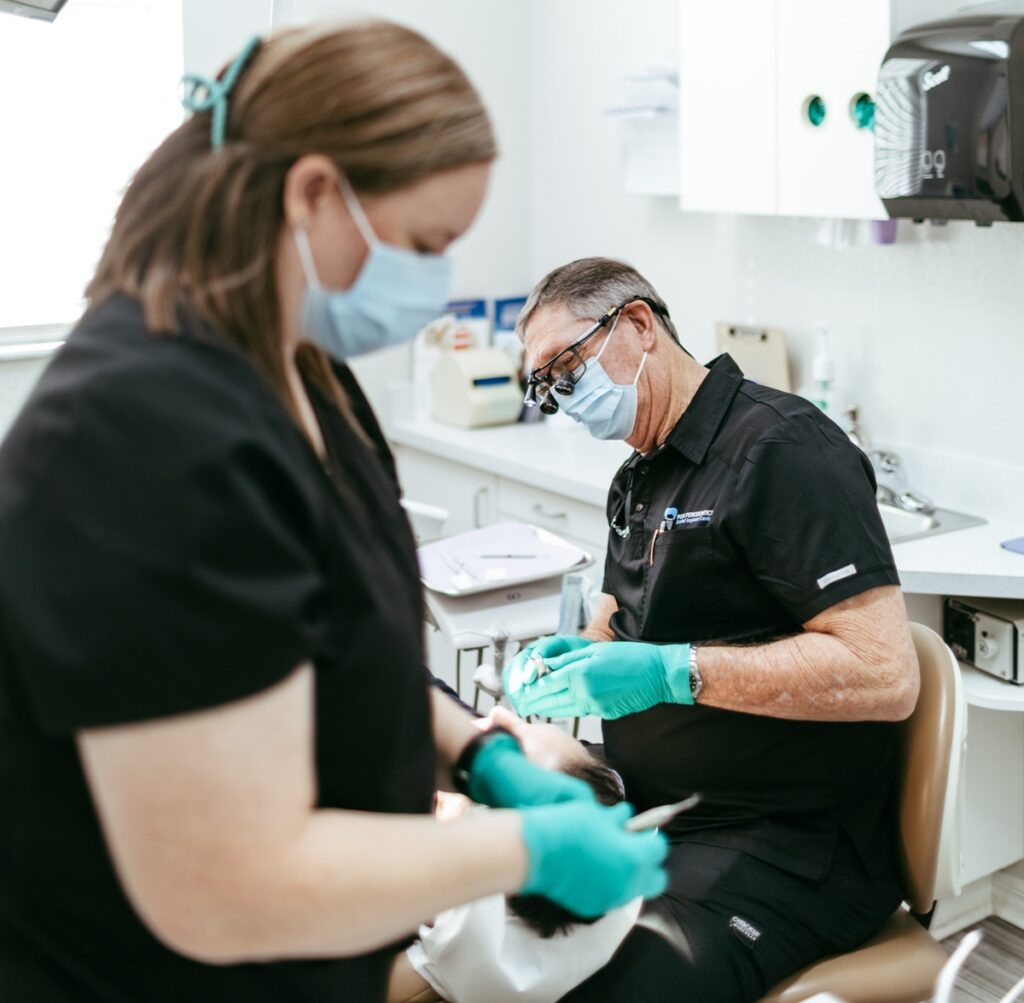
When patients lose a tooth or teeth due to trauma or periodontal disease, dental implants are an ideal option for patients with good general oral health. Implants look and feel like your own teeth and can last a lifetime if given the proper care and maintenance.
There are other routes a patient can take to replace missing teeth, including dentures and bridges; however, dental implants are a much better solution for many reasons.
- Adjacent teeth do not have to be altered to support an implant, such as with bridgework. This is significant for your overall oral health by leaving more of your own teeth untouched. With a tooth-supported fixed bridge, the adjacent teeth are ground down to support the fixed bridge.
- Dental implants are integrated into the structure of your bone, minimizing possible bone loss and gum recession that can sometimes be attributed to bridgework and dentures.
- Dental implants function just as your natural teeth do, offering you more comfort and stability than conventional dentures.
Dental implants aid in replacing a single tooth, several teeth or even all of your teeth. The implant itself looks like a screw or cylinder and is placed into the jaw. Over the period of 3-6 months, the implant and jawbone bond together to provide an anchor for the crown. An abutment is used as an extension to complete the foundation for the new tooth to be attached.
Sometimes several teeth need to be replaced, and implant-supported bridges are a prime option as opposed to removable partial dentures. The bone is better preserved with implant-supported bridges as they permanently replace your teeth that have been lost.
Replacing all of your teeth is also possible with implant-supported full bridges or implant-supported dentures. Patients are able to preserve their natural bite with implants and achieve more comfort and stability than with conventional dentures.
Although proper oral hygiene is always recommended for maintaining good dental health, it is especially important when a patient has received a dental implant. Bacteria can attack sensitive areas in the mouth when teeth and gums are not properly cleaned, thus causing gums to swell and jaw bones to gradually recede. Recession of the jawbone will weaken implants and eventually make it necessary for the implant to be removed. Patients are advised to visit their dentist at least twice a year to ensure the health of their teeth and implants. Dental implants can last for decades when given proper care.
Extractions
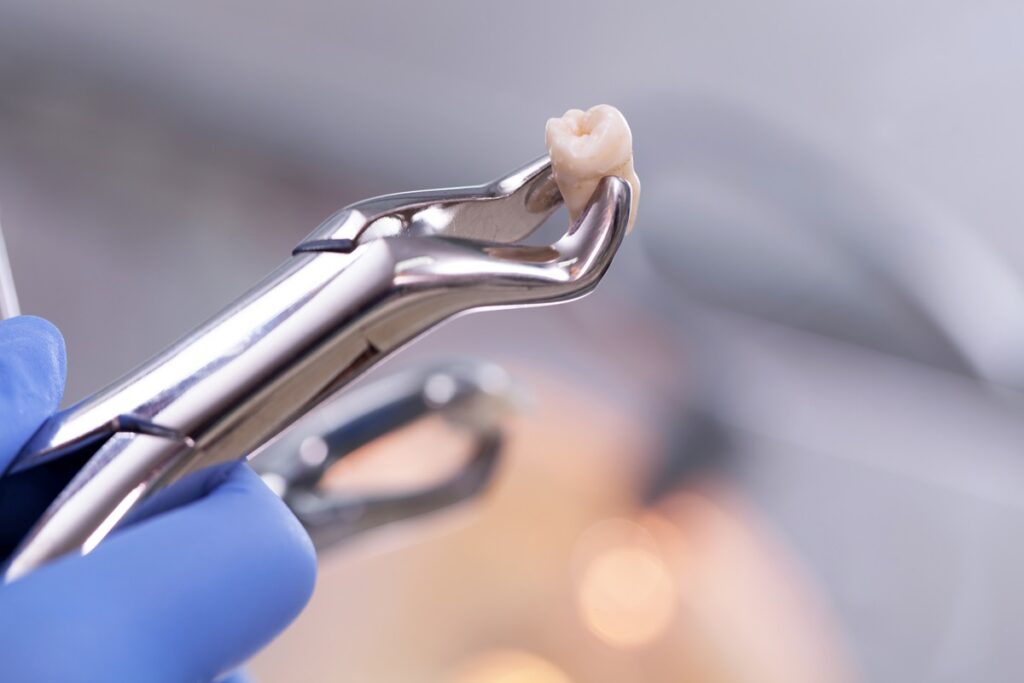
Natural teeth are ideal for biting, chewing and maintaining mouth and jawbone structure, which is why a dentist’s priority is to help restore, save and repair your natural teeth. However, sometimes a tooth extraction is unavoidable.
Dental extractions are recommended when a tooth can no longer be restored or poses a risk to your overall oral health. Common reasons include severe decay that has damaged the tooth beyond repair, advanced gum disease, fractures or infection. Removing a problematic tooth helps prevent further infection, pain, and damage to surrounding teeth, supporting a healthier, more comfortable smile.
Computer-Guided Implant Placement
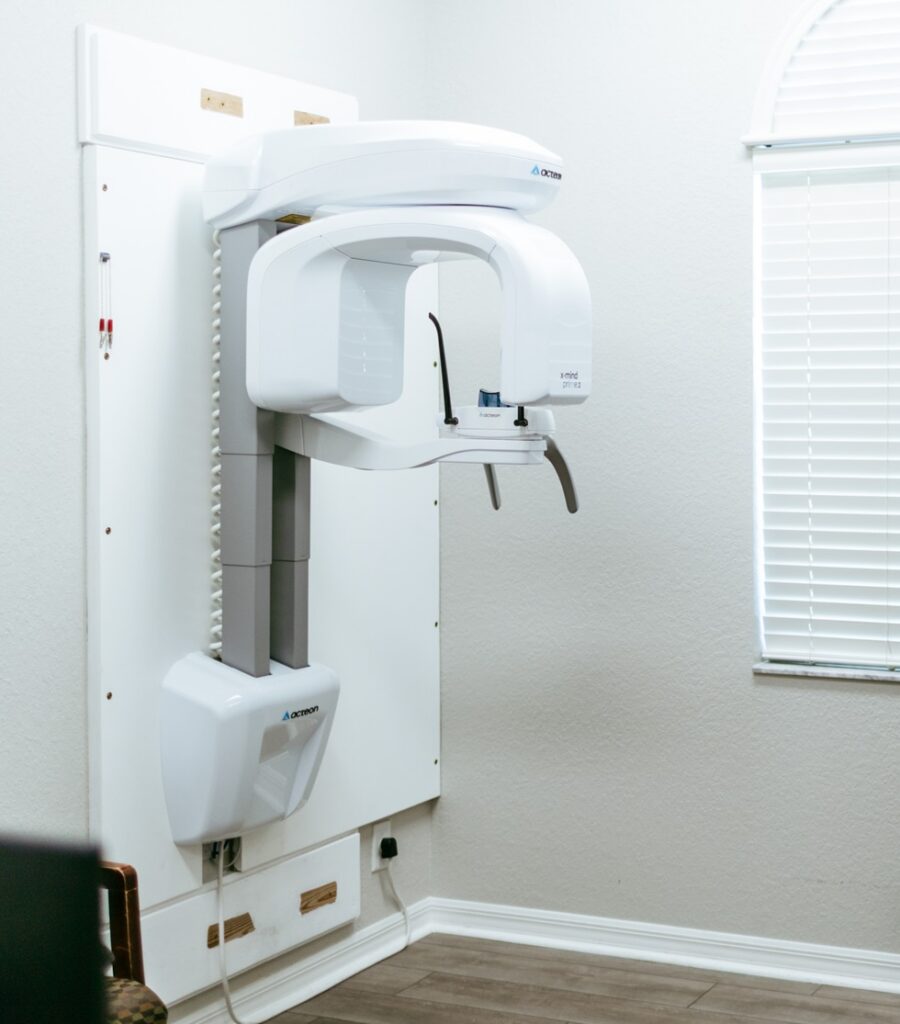
Computer guided implant surgery represents a giant step forward in the replacement of teeth with dental implants. With Computerized Tomography (CT) Scan techniques and 3-D imaging, we can now visualize the placement of dental implants in three dimensions. This eliminates the guesswork involved determining what parts of the jawbone offer the best sites for dental implant placement. Computer guided implant surgery provides greater patient satisfaction and simplifies the dental implant treatment process. We utilize the latest implant systems and software along with our own CT scanner to deliver the best implant results to you.
Bone Grafting
Much in the same way that gum tissue can be restored with soft tissue grafts, the same can be said for those patients who suffer from bone loss due to periodontitis. Bone in the jaw is kept strong and healthy when a healthy tooth is in its socket. However, when bone loss occurs the tooth has less support, can become loose and eventually be lost.
Guided Tissue Regeneration (GTR) attempts to regenerate lost periodontal structures, such as bone, ligaments and connective tissue attachments that support the teeth. Biocompatible membranes are used conjunctively with bone grafts for the regeneration to be successful.
If a tooth is lost, a patient may seek dental implants to restore his/her smile. However, even dental implants need a healthy jawbone before they can be placed. Guided Bone Regeneration (GBR) or Ridge Augmentation can rebuild and widen the jawbone to allow implants to be placed and to have permanent teeth again.
Gum Grafting
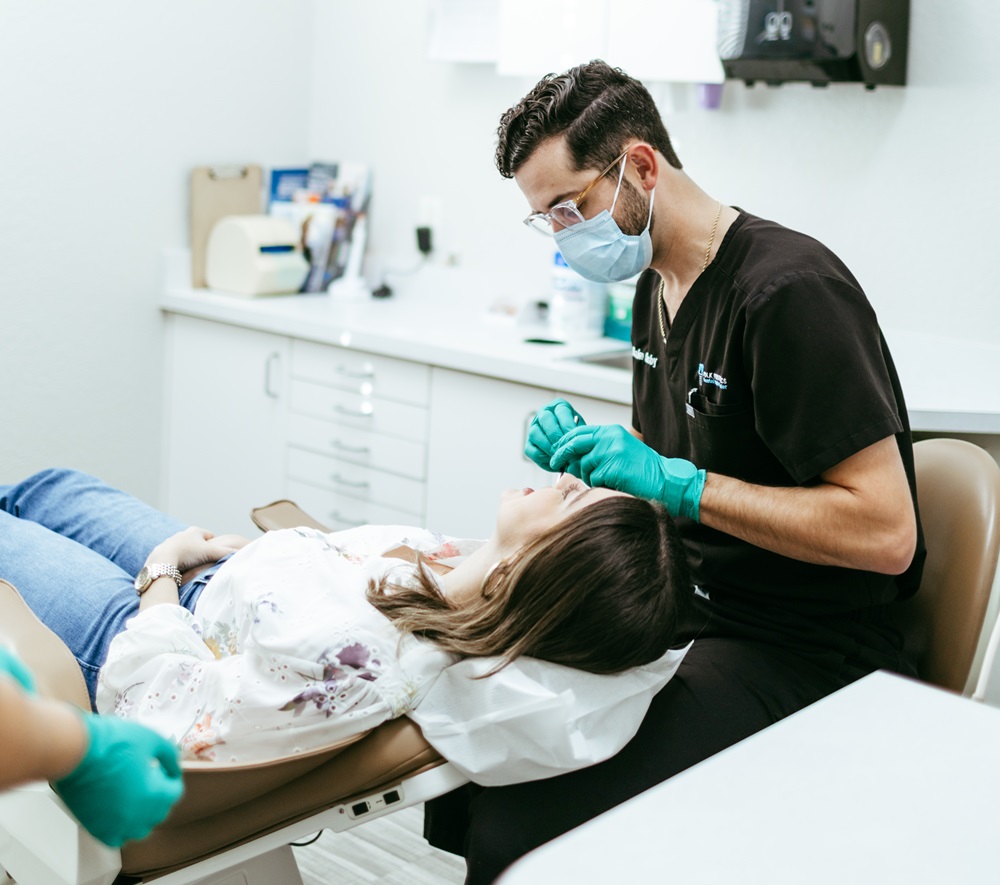
Periodontal procedures are available to stop further dental problems and gum recession, and/or to improve the esthetics of your gum line.
Perhaps you wish to enhance your smile by covering one or more of these roots that make your teeth appear too long. Or, maybe you’re not bothered by the appearance of these areas, but you cringe because the exposed roots are sensitive to hot or cold foods and liquids.
Your gums may have receded for a variety of reasons, including aggressive tooth brushing or periodontal disease. You may not be in control of what caused the recession, but prior to treatment your periodontist can help you identify the factors contributing to the problem. Once these contributing factors are controlled, a soft tissue graft procedure will repair the defect and help to prevent additional recession and bone loss.
Soft tissue grafts can be used to cover roots or develop gum tissue where absent due to excessive gingival recession. During this procedure, your periodontist takes gum tissue from your palate or another donor source to cover the exposed root. This can be done for one tooth or several teeth to even your gum line and reduce sensitivity.
A soft tissue graft can reduce further recession and bone loss. In some cases, it can cover exposed roots to protect them from decay. This may reduce tooth sensitivity and improve esthetics of your smile. Whether you have soft tissue grafting to improve function or esthetics, patients often receive the benefits of both: a beautiful new smile and improved periodontal health – your keys to smiling, eating and speaking with comfort and confidence.
Crown Lengthening
Crown lengthening is a periodontal procedure that reshapes the gum and supporting tissues to expose more of the tooth. This procedure can be used for aesthetic reasons to repair teeth that appear too short (gummy smiles) and uneven gum lines.
It is also commonly performed on patients to repair a tooth that is fractured or decayed below the gum line. By reshaping the gum and supporting tissue, the fractured or decayed area becomes more accessible and gives us the needed space to establish the restoration.
With crown lengthening, patients reap the benefits of both enhanced function and aesthetics. Their overall periodontal health improves along with letting the natural beauty of their smile shine through.
Periodontal Disease Treatment
Over time, plaque combines with natural minerals in the mouth forming calculus (tartar). These hard concretions adhere to the teeth and form a rough surface on the teeth and roots, allowing for even more plaque accumulation. Calculus by itself does not cause the deterioration of the periodontal attachment. Rather, it serves as a substrate for the further colonization of bacterial plaque on the irregular root surfaces. The bacteria initiate and perpetuate the inflammatory process that causes periodontal disease.
After x-rays, a clinical exam, periodontal charting and patient education, scaling and root planing can be the first treatment for periodontal disease. This non-surgical procedure serves to remove the calcified irritants under the gums thereby reducing inflammation and infection.
In certain situations, non-surgical care alone cannot fully restore gum health, making surgical treatment necessary. Periodontal surgery is a set of dental procedures used to treat advanced gum disease by accessing the tissues beneath the gumline to remove bacteria, reduce inflammation, and restore supportive structures around the teeth. During these procedures, a periodontist may lift the gums to thoroughly clean deep pockets, reshape or regenerate bone. The goal is to stop the progression of periodontal disease, improve gum health, and create a stable foundation for long-term oral function and hygiene.
Periodontal maintenance is essential for preserving the long-term health of your gums and supporting structures after treatment for gum disease. Regular maintenance visits allow our team to thoroughly clean areas that are difficult to reach at home, monitor for signs of recurrence, and address problems early before they progress. Because periodontal disease is chronic and can return without ongoing care, consistent maintenance helps control inflammation, prevent further bone loss, and protect overall oral health. This continued attention not only supports the success of previous treatments but also contributes to keeping teeth stable and reducing the risk of future complications.
Sedation
Nitrous oxide, often called laughing gas, is a pleasantly scented gas that you breathe in through a small mask over your nose. It helps you relax and reduces anxiety within moments. Its effects fade quickly once the procedure is finished, so you can return to your usual activities almost immediately.
Oral conscious sedation involves taking a pill at our office before your appointment. This medication helps calm your nervous system, creating a relaxed, drowsy state that significantly reduces anxiety. While you remain awake and able to respond, you’ll feel more at ease and less aware of the procedure.a
IV conscious sedation involves delivering calming medications directly into a vein, allowing them to take effect quickly and provide a deeper, more controlled level of relaxation. This method offers significant benefits, including a rapid onset of sedation, the ability to adjust the dosage instantly for your comfort, and a deeper sense of calm compared to other sedation options. Throughout your procedure, our highly trained team carefully monitors your vital signs and adjusts the medication as needed to ensure you remain relaxed, safe, and comfortable from start to finish. Many patients remember little to nothing about the procedure afterward, making IV conscious sedation an excellent option for those with high dental anxiety or more complex treatment plans.
Sinus Elevation
The upper back jaw has traditionally been one of the most difficult areas to successfully place dental implants due to insufficient bone quantity and quality and the close proximity to the sinus. If you’ve lost bone in that area due to reasons such as periodontal disease or tooth loss, you may be left without enough bone to place implants.
Sinus elevation surgery can help correct this problem by raising the sinus floor and developing bone for the placement of dental implants. Several techniques can be used to raise the sinus and allow for new bone to form.
Undergoing sinus elevation surgery has been shown to greatly increase your chances for successful implants that can last for years to come.
Oral Pathology
The inside of your mouth is normally lined with smooth, pink tissue called mucosa. Any changes in its color, texture, or appearance, such as persistent redness or white patches, lumps, thickened areas, sores that don’t heal, or unexplained bleeding, can be a sign that something isn’t quite right. While many changes are harmless, some can indicate serious conditions, including oral cancer, which often starts without noticeable symptoms. That’s why it’s important to have any unusual findings checked promptly, as early detection makes treatment more effective.
One of the most reliable ways to find out what’s going on is through a biopsy. During this simple procedure, a small sample of tissue is taken and examined to see if it is normal, precancerous, or cancerous. This allows our team to provide the right care quickly and accurately. Combining careful oral examinations with biopsy testing ensures that potential problems are caught early, giving you the best chance for successful treatment and peace of mind.
Impacted Canines
Sometimes, a canine tooth doesn’t come in on its own and stays stuck in the gums or jawbone. These are called impacted canines. If left untreated, they can cause crowding, misalignment, or affect nearby teeth.
To bring an impacted canine into its proper position, a minor surgical procedure is performed. During this procedure, we carefully uncover the impacted tooth and attach a small bracket and chain. Your orthodontist then uses gentle, controlled forces to guide the tooth gradually into its correct place in the dental arch. This combined surgical and orthodontic approach helps ensure proper alignment, improves function, and creates a more natural, aesthetically pleasing smile.
Experience comfortable, personalized care.
Our team is dedicated to making every visit pleasant and stress-free. Contact us today to schedule your appointment or ask a question about your care.